
OUR BLOGS
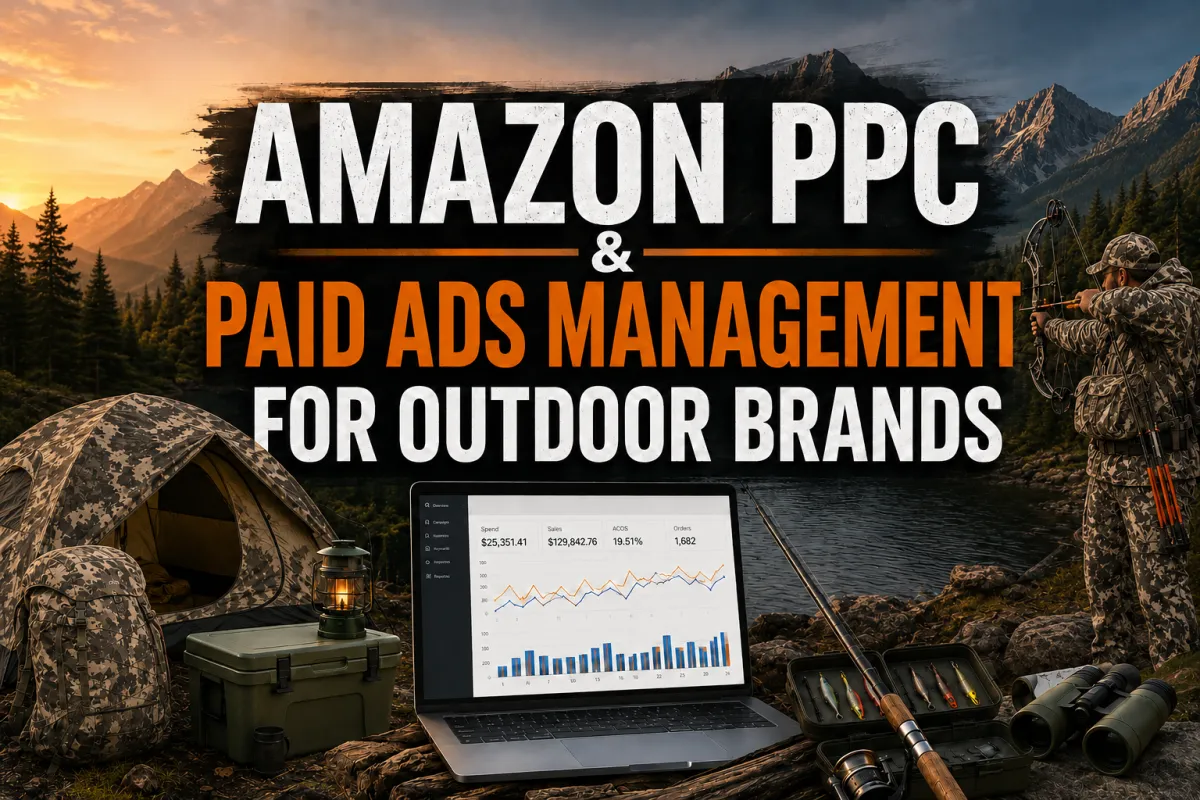
Amazon PPC & Paid Ads Management for Outdoor Brands
Most outdoor brands run Amazon ads. But few run them profitably.
They launch campaigns, spend money, and wait for results. When sales don't come, they increase the budget. Or they shut it all down. Neither approach fixes the real problem.
The real problem is strategy. Running a profitable amazon ppc agency model means building campaigns with structure, data, and discipline. It is not about how much you spend. It is about how intelligently you spend it.
This guide breaks down everything outdoor brands need to know. You will learn how Amazon PPC works, how to build campaigns that convert, and how amazon paid ads management drives long-term growth.
What Is Amazon PPC and Why Does It Matter for Outdoor Brands?
Amazon PPC stands for pay-per-click advertising. You bid on keywords. Your ads appear in search results. You pay only when someone clicks.
It sounds simple. But the execution separates brands that scale from brands that bleed budget.
Outdoor buyers are high-intent shoppers. Someone searching for "waterproof hunting boots" is ready to buy. They are not browsing. They are deciding. Amazon PPC puts your product in front of them at exactly that moment.
That is why amazon advertising agency services are so valuable for hunting, fishing, and camping brands. The traffic is warm. The conversion potential is high. But only if your campaigns are built the right way.
The Three Amazon Ad Types Every Outdoor Brand Must Know
Sponsored Products
Sponsored Products are the foundation of any PPC strategy. They appear inside search results and on competitor product pages.
They target individual listings. When a shopper clicks, they land directly on your product page. This is the highest volume, highest-converting ad type on Amazon. Most outdoor brands should allocate the majority of their budget here.
Sponsored Brands
Sponsored Brands appear as banner ads at the top of search results. They show your logo, a headline, and multiple products.
These ads target shoppers who are still comparing options. They have not decided yet. A strong Sponsored Brands campaign positions your outdoor brand as the category leader. Over time, this builds branded search volume. Shoppers start searching for your brand directly.
That is one of the most valuable assets an outdoor brand can build on Amazon.
Sponsored Display
Sponsored Display retargets shoppers who viewed your products but didn't purchase. It follows them across Amazon and beyond.
This ad type is powerful for outdoor gear with longer decision cycles. A hunter researching scent-blocking jackets may visit your listing three times before buying. Sponsored Display keeps your product visible throughout that process.
Why Your Amazon PPC Strategy Must Start With the Listing
No amazon ppc campaign strategy works on a weak listing.
Paid traffic sent to a poor listing is money wasted. Your title, bullet points, images, and A+ Content must be conversion-ready before you spend a dollar on ads.
Here is why this matters in numbers. A listing converting at 15% generates three times more sales than one converting at 5%. Same ad spend. Triple the output. The listing is the multiplier.
Before launching any campaign, audit your listing:
Is your primary keyword in the title?
Do your images show the product in real outdoor use?
Are your bullet points benefits-first, not features-first?
Is your A+ Content complete and visually strong?
If the answer to any of these is no, fix the listing first. Then run ads.
Building a High-Performing Amazon PPC Campaign Structure
Campaign structure is where most outdoor brands fail. Poor structure means messy data. Messy data means bad decisions. Bad decisions drain budgets.
The Isolation Principle
Separate everything. Each campaign should answer one specific question.
Do not mix broad match, phrase match, and exact match keywords in the same campaign. You will not be able to read the data. You will not know what is working.
Keep match types separate. Keep high-performing and low-performing products separate. Keep competitor targeting in its own campaigns.
This structure gives you clean data. Clean data lets you optimize with confidence.
The Auto to Manual Pipeline
This is one of the most powerful systems in amazon paid ads management.
Run automatic campaigns at a moderate budget. Let Amazon discover which search terms convert for your products. Every week, review your search term reports. Find the terms generating sales below your target ACoS. Move those terms into exact match manual campaigns. Add them as negative keywords in your auto campaigns.
Repeat this process every week. Over time, your manual campaigns fill with battle-tested keywords. Your account becomes more efficient month after month.
Negative Keywords Are Your Best Weapon
Most outdoor brands ignore negative keywords. That is a costly mistake.
Every week, your search term reports show searches that triggered your ads but generated zero sales. Irrelevant searches. Searches that don't match your product. Adding these as negatives immediately stops you paying for those clicks.
The saved budget flows into your profitable keywords. Your account efficiency improves without spending an extra dollar.
How to Set Bids That Protect Profitability
Bidding is both art and science. Set bids too low and your ads rarely show. Set bids too high and you win clicks that cost more than they return.
Know Your Break Even ACoS First
Before setting a single bid, calculate your break even ACoS. This is the maximum advertising cost of sale where you neither profit nor lose.
If your product has a 35% margin, your break-even ACoS is 35%. Every campaign decision should reference this number.
Adjust Bids Based on Data, Not Guesses
Let campaigns run for two to three weeks before making adjustments. You need meaningful data before drawing conclusions.
Then follow these rules:
Keywords below your target ACoS: increase bids to capture more volume
Keywords above your target ACoS: reduce bids to protect profitability
Keywords with clicks but zero sales: reduce bid or add as negative
Make changes in 10 to 20% increments. Dramatic bid swings destabilize performance. Patience and consistency compound into major efficiency gains over months.
Amazon PPC Keyword Strategy for Outdoor Brands
Most outdoor brands target only the obvious high-volume keywords. "Hunting boots." "Fishing rod." "Camping tent." These terms are competitive and expensive.
A smarter amazon ppc campaign strategy goes deeper.
Long-Tail Keywords Drive Profitability
Long-tail keywords are three or more words. They describe a specific product, use case, or buyer need.
"Waterproof hunting boots for wide feet." "Ultralight fly fishing rod under $200." "Two-person camping tent for high altitude."
These searches convert at a higher rate. The shopper knows exactly what they want. Competition is lower. Your ACoS drops. Your profitability rises.
Build your keyword strategy with a core of competitive primary terms supported by a large volume of long-tail keywords. The primary terms build visibility. The long-tail terms build profit.
Competitor Targeting Done Right
Targeting competitor ASINs can capture market share. But most brands execute this poorly.
Competitor targeting only works when your product has a clear advantage. Better reviews. A lower price. A stronger feature. If your listing cannot win the comparison, you will pay for clicks that never convert.
What Ongoing Amazon Ads Management Actually Looks Like
Launching campaigns is the beginning. Profitability comes from what happens next.
A well-managed amazon advertising agency relationship includes consistent weekly and monthly work. This is not optional. It is what separates growing accounts from stagnant ones.
Weekly Tasks
Review search term reports and add negative keywords
Adjust bids on keywords with sufficient performance data
Check budget pacing across all active campaigns
Confirm no listings are suppressed or have policy issues
Monthly Analysis
Review overall ACoS and TACoS trends
Identify top and bottom performing products
Reallocate budget toward high-performing campaigns
Plan for seasonal trends and upcoming promotions
TACoS — total advertising cost of sale — is your most important long-term metric. It measures ad spend against total revenue including organic sales. A declining TACoS over time means your PPC investment is building organic ranking. That is the compound effect that transforms your Amazon business.
Common Amazon PPC Mistakes Outdoor Brands Make
Running only automatic campaigns:
Auto campaigns are discovery tools. They are not a strategy. Manual campaigns built from keyword research are where your performance foundation lives.
Ignoring the listing:
Paying for traffic to a weak listing is the fastest way to waste budget. Fix the listing before scaling any campaign.
Optimizing for ACoS alone:
A low ACoS sounds good. But a brand investing aggressively at a higher ACoS may be building organic rankings worth far more than the short-term cost. Always track TACoS alongside ACoS.
Not refreshing creatives:
Ad creative fatigues fast. Sponsored Brands headlines and images need regular testing and updating.
Chasing the wrong metrics:
Clicks and impressions mean nothing without conversions. Optimize for revenue, ACoS, and profit margin, not vanity numbers.
Why Outdoor Brands Need a Dedicated Amazon PPC Strategy
The outdoor category is competitive. Hunting, fishing, and camping are saturated with both brand sellers and private label competitors.
Winning on Amazon in 2026 requires more than a product. It requires an amazon ppc agency approach built around your specific category, your margins, and your growth goals.
Six Star Brands works exclusively with outdoor brands. We understand the seasonal demand cycles of hunting season. We know how fishing gear buyers search differently from hikers. We build campaigns that match buyer intent at every stage of the purchase journey.
If you want campaigns that compound, not campaigns that just run — explore our Amazon paid ads management services or visit our full-stack ecommerce growth page to see how paid ads fit into a complete growth system.
Frequently Asked Questions
What is Amazon PPC for outdoor brands?
Amazon PPC is pay per click advertising on Amazon. Outdoor brands bid on keywords. Their ads appear in search results. They pay when a shopper clicks. Done correctly, it drives profitable sales and builds organic rankings.
What does an Amazon advertising agency do?
An Amazon advertising agency builds, manages, and optimizes your PPC campaigns. This includes keyword research, campaign structure, bid management, negative keyword maintenance, and ongoing performance analysis.
What is a good ACoS for outdoor brands?
A good ACoS depends on your product margin. Your target ACoS should be at or below your profit margin percentage. If your margin is 35%, keep ACoS at or below 35% to remain profitable.
How long does Amazon PPC take to show results?
Most campaigns show early performance signals within four to six weeks. Consistent profitability and meaningful organic ranking improvements typically emerge in months two to four as the account optimizes.
What is TACoS and why does it matter?
TACoS is total advertising cost of sale. It measures ad spend against total revenue including organic sales. A declining TACoS over time means your paid campaigns are successfully building organic growth, which is the goal of every serious Amazon brand.


It all starts
with a conversation.
Quick Links
Join Our Newsletter
* Will send you weekly updates for your better tool management.
© 2026 Six Star Brands. Privacy Policy & Terms of Service